The British Disease
Notes on Britain's Relative Decline

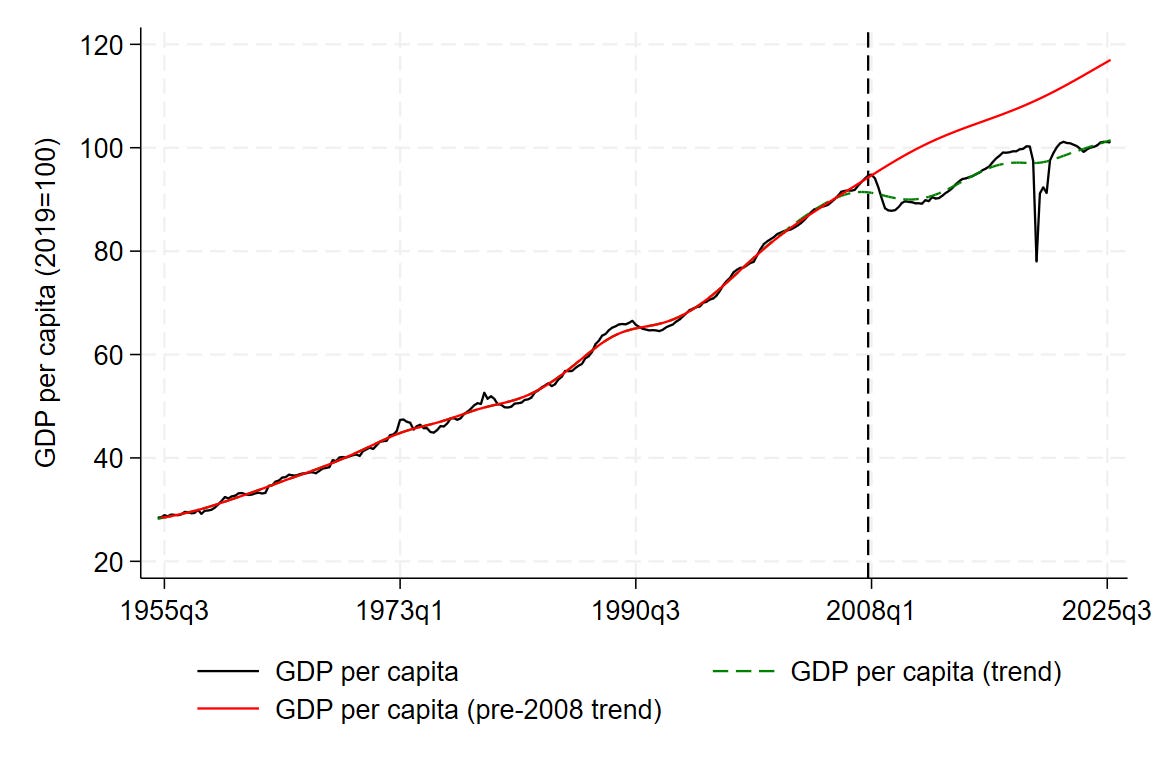
The UK ONS has released its estimates of national accounts through the end of 2025. Things are not looking great in the UK: trend growth in GDP per capita is still below its pre-2008 trend. This is the now familiar ‘productivity puzzle’, shown in Figure 1 for readers who may not have seen it before. This is well documented (and I have written about it previously here and here).
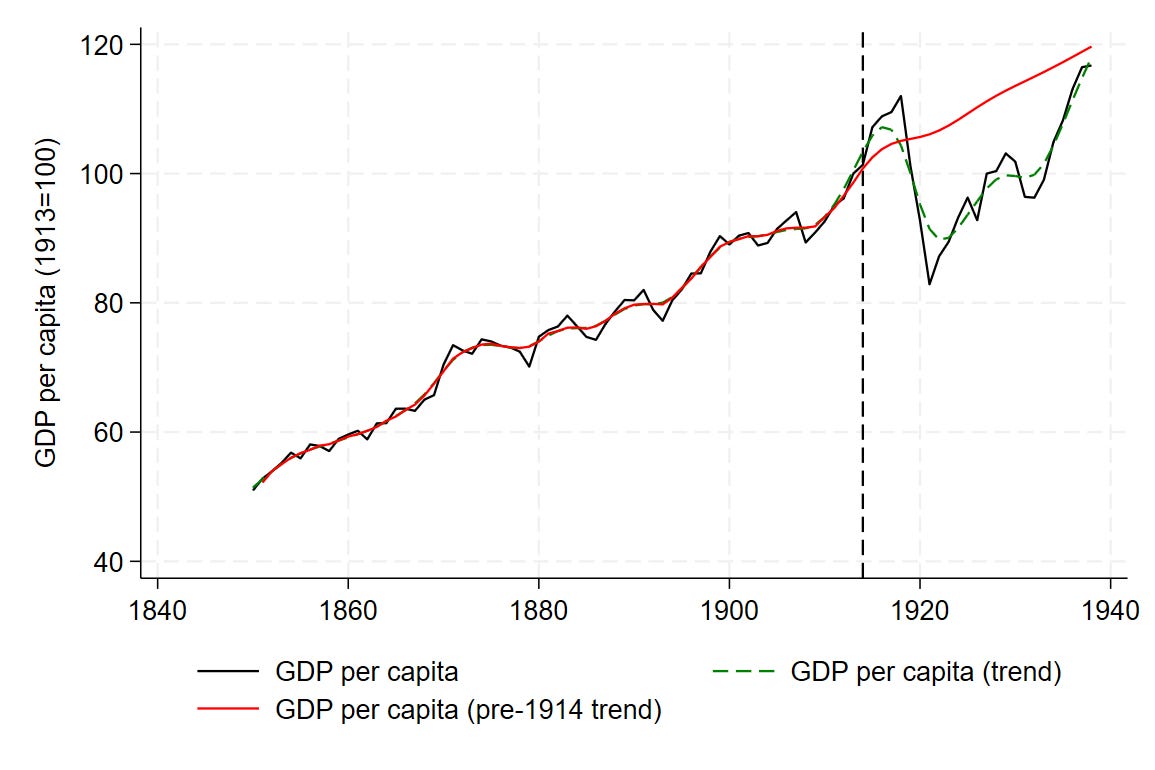
What has received much less attention is that this pattern is not new (see this classic paper). Figure 2 shows the same pattern after the First World War: GDP per capita never returns to its pre-war trajectory. According to recent work, the 1919-21 recession was the deepest in modern British history. Britain also experienced a larger annual fall in exports in 1921 (30 per cent) than in any year during the Great Depression.
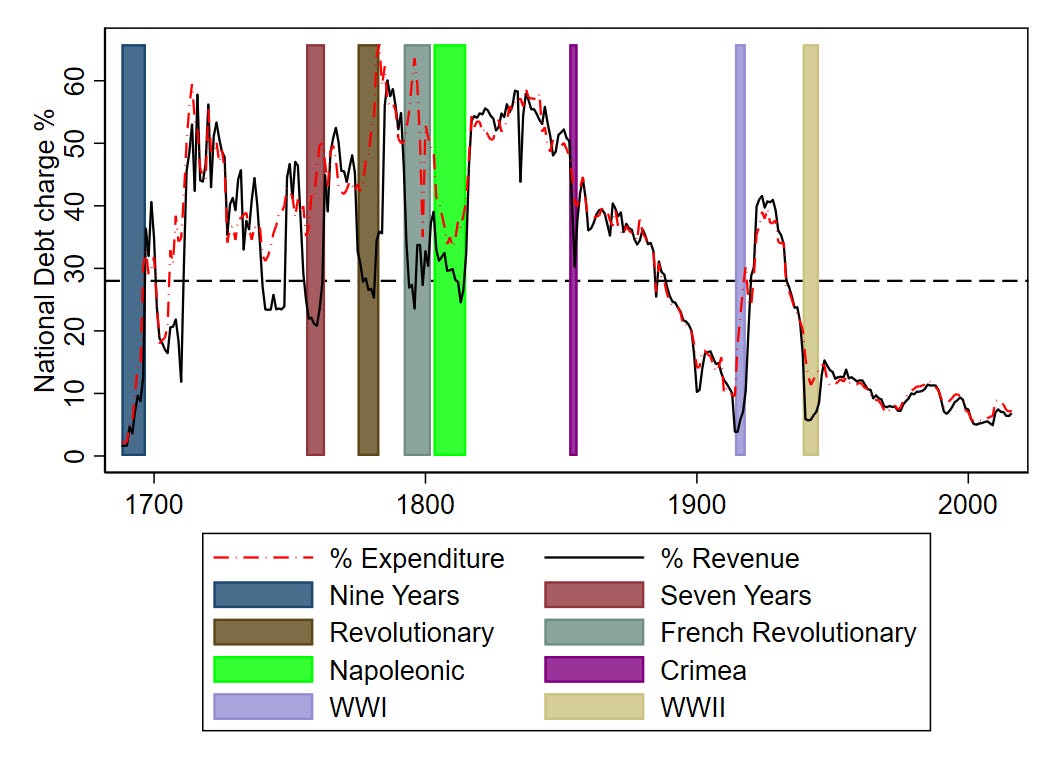
The First World War was a dramatic shock to the global economy and marked the end of Pax Britannica. Policymakers had little recent experience of large-scale warfare (the Napoleonic wars were a century before) or how to finance it, and relied heavily on borrowing. The result was sharp rise in inflation and a substantial increase in public debt. In the aftermath of the war, debt serving took up a larger share of government revenue (and expenditure), see figure 3. The War Loan alone made up 14% of government revenue in 1932.
The First World War ushered in a period of structural change as Britain’s traditional staple industries entered terminal decline as they struggled to adapt to an era of intensified competition and shrinking export markets. During the war, many of the traditional export markets were cut off and began to develop their own domestic industries. While some more optimisitic assessments of the interwar period emphasise the emergence of new industries and a shift in the UK’s economic geography, the overall picture of the interwar period is one of persistently high unemployment, particularly in the depressed industrial north.
There were of course important developments that helped life Britain out of its malaise. Leaving the Gold Standard in 1931, the 1932 conversion of the War Loan (a partial default on the war debt), and re-armament all contributed to the recovery.
The parallels with today are hard to ignore. Just as after WWI, the British economy has struggled to return to its pre-war trend. As in the interwar period, policy choices have likely exacerbated these dynamics: returning to gold at parity after WWI (effectively locking in an overvalued exchange rate) to Brexit reducing competitive pressures in the modern economy.
The post-2008 period may not be so different. The question is not just why growth has been weak, but whether we should expect it to return at all (especially given current policies and ongoing shocks from the global economy). The British experience suggests that sometimes economies do not bounce back, they can settle onto persistently lower growth trajectories.